
Unlock the Power of Medical Writing and Pharmacovigilance Solutions
Experience seamless Medical Writing and pharmacovigilance operations, comprehensive surveillance, advanced database systems, and expert QPPV services.
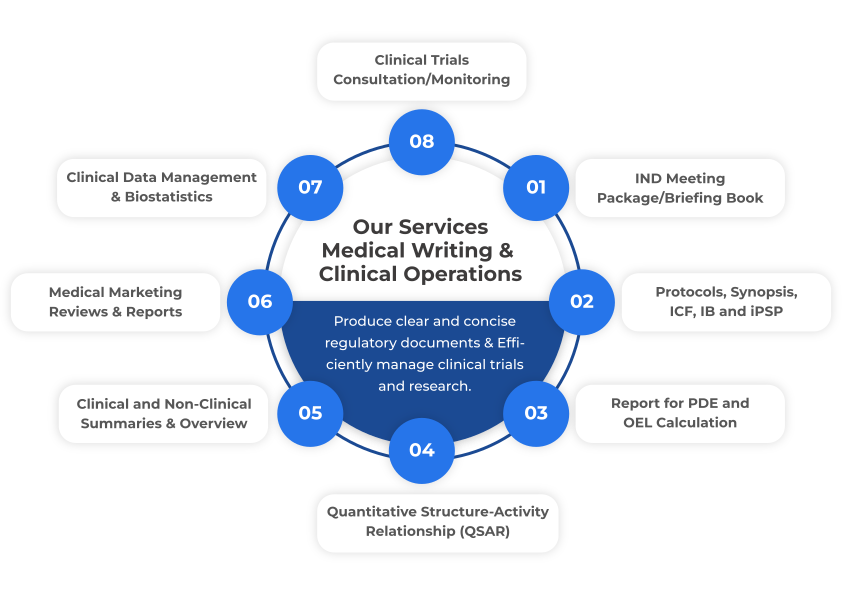
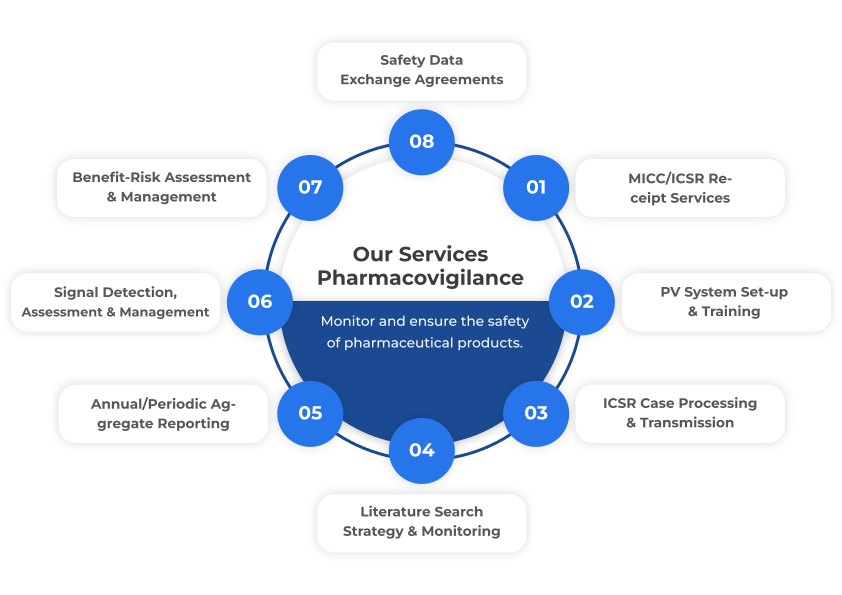
Our Services
Comprehensive Medical Writing and Pharmacovigilance Solutions
Our Expertise
Partner with Masuu Global for Comprehensive Medical Writing and Pharmacovigilance Solutions & Safeguarding Patient Wellbeing: The Power of Pharmacovigilance
At Masuu Global, we provide comprehensive Medical Writing and Pharmacovigilance (PV) solutions to ensure the safety and compliance of pharmaceutical products. Our experienced team of PV experts works diligently to monitor, assess, and manage the safety profile of drugs, ensuring that they meet the highest standards of quality and regulatory requirements.
Customized Approaches for Enhanced Safety Measures
We customize our PV services to meet unique client needs, aligning with their product portfolio and regulations. Our personalized approach enhances safety measures, addressing specific challenges and risks for each client’s pharmaceutical products.
Early Risk Identification for Proactive Safety Measures
Our advanced tools identify safety signals early, allowing proactive monitoring and risk assessment. We take prompt action to mitigate emerging risks, helping clients stay ahead and implement effective safety measures.
Navigating Complex Regulatory Requirements
With extensive global regulatory knowledge, Masuu Global ensures compliance and keeps clients updated on evolving guidelines. We assist with regulatory submissions and help navigate complex regulatory landscapes.

Streamlined PV Data Management
At Masuu Global, we excel in managing safety databases. Our expertise in case processing, reconciliation, and signal management ensures accurate data handling. With robust systems and best practices, we securely manage client data for comprehensive safety monitoring and analysis throughout the PV lifecycle.

Striving for Excellence in PV Operations
Quality is our priority at Masuu Global. With robust systems and continuous improvement, we strive for excellence. Adhering to industry best practices, we maintain high standards of quality and compliance. Our commitment to continuous improvement ensures top-notch PV services and client confidence in product safety.
What Our Client’s Say About Us
Frequently Asked Questions
Pharmacovigilance covers the detection, assessment, understanding, and prevention of adverse effects and other safety-related issues associated with medicines. Activities can include individual case safety report processing, safety data management, signal detection, literature monitoring, aggregate reporting, risk management, safety database management, and ongoing assessment of a product’s benefit–risk profile.
Setting up a pharmacovigilance system involves establishing documented processes for safety data collection, case processing, assessment, reporting, signal detection, literature monitoring, quality management, and regulatory compliance. The system should define responsibilities, workflows, escalation procedures, safety database processes, and applicable reporting requirements based on the company’s products and target markets.
An Individual Case Safety Report is a structured record containing information about a suspected adverse event or other safety-related report associated with a medicinal product. ICSR processing typically involves receiving and validating the case, assessing reportability, coding relevant information, performing medical review, following up for missing information, and submitting reportable cases within applicable timelines.
Signal detection is the process of identifying information that may indicate a new or previously unrecognized causal relationship between a medicine and a safety event. It involves reviewing safety data from sources such as individual case reports, clinical information, literature, and other available data. Potential signals are then assessed to determine whether further investigation or action is warranted.
A Risk Management Plan describes how important identified and potential risks associated with a medicinal product will be characterized, monitored, and managed. It brings together available safety information, risk assessment, pharmacovigilance activities, and risk minimization measures. The RMP can be updated as new safety information becomes available during the product lifecycle.
Pharmacovigilance literature monitoring helps identify published information relevant to the safety of medicinal products. Searches can identify adverse events, emerging safety concerns, case information, and new scientific evidence that may require further assessment. Relevant findings can contribute to ICSR processing, signal detection, aggregate reporting, and ongoing evaluation of a product’s safety profile.
PADER and PSUR are aggregate safety reports used to periodically evaluate accumulated safety information for a medicinal product. They summarize relevant safety data, exposure information, important findings, and benefit–risk considerations over a defined reporting period. The applicable report, format, content, and submission requirements depend on the regulatory jurisdiction and product.
A pharmacovigilance safety database should support controlled management of safety information throughout the product lifecycle. Depending on the system and processes, this can include adverse event cases, case follow-up, medical review, coding, case status, reporting workflows, reconciliation, signal-related information, and audit trails. Appropriate controls help maintain data quality, traceability, and regulatory compliance.
The Qualified Person for Pharmacovigilance has a key role in overseeing an applicable pharmacovigilance system and ensuring that safety information is appropriately managed and regulatory obligations are fulfilled. Responsibilities can include oversight of safety monitoring, compliance, signal management, reporting processes, and the overall functioning of the pharmacovigilance system within the relevant regulatory framework.
Medical writing converts clinical, scientific, and safety information into structured regulatory and scientific documents, while pharmacovigilance generates and evaluates safety evidence throughout the product lifecycle. Their activities intersect in documents such as safety reports, risk management plans, aggregate reports, clinical and regulatory submissions, and responses to regulatory authorities, where accurate interpretation and clear presentation of safety data are essential.